

Writing from the desk
CS Neha Rathore
Partner
- Secretarial Compliance
- AIF Compliance
- FEMA & ROC
Neha is a highly skilled professional specialising in secretarial compliances and legal work for companies. With a deep understanding of corporate governance, regulatory requirements, and legal frameworks, she plays a crucial role in ensuring organisations adhere to statutory obligations, maintain transparency, and manage risks effectively.
Her responsibilities include managing companies' compliance with laws such as the Companies Act, overseeing the proper filing of documents, and ensuring timely submission of required forms with authorities like the Registrar of Companies. She also provides expert legal guidance ranging from contract drafting to dispute resolution, offering essential support for mergers and acquisitions.
Body of work
All articles by Neha.

Fund structuring
Sponsor commitment: structuring it so the GP has real skin in the game
SEBI requires the GP to commit capital alongside the LPs. The minimum is mechanical; the question is how the commitment is funded and where it sits. Get the structure wrong and the skin-in-the-game signal disappears.
10 min read

Board & governance
BRSR for unlisted companies: when SEBI's ESG net widens beyond listed
BRSR currently applies to the top 1,000 listed companies by market cap. The unlisted question — when does it extend to large private companies — is being asked by investors before it is being answered by regulators. The companies that wait for the regulation are running a year or two behind their investors.
10 min read

Board & governance
Audit committee charter: drafting one that's not just boilerplate
Most audit committee charters read the same. They were drafted by copying a template that copied a template. The charter that produces a working audit committee is specific to the company — particularly on scope, dispute resolution, and the executive session with the auditor.
10 min read

AIF regs & tax
SEBI compliance reports: the monthly and quarterly cadence
An AIF's regulatory life is a sequence of filings on a fixed calendar. Miss a monthly NAV deadline and the SEBI portal flags it. Miss enough of them and the examination team starts asking questions. The cadence is straightforward; the failure modes are not.
10 min read

Filings & compliance
Compounding of offences under Section 441: when it's the right call, when it's a trap
Compounding looks like the clean way out of a procedural lapse. Pay the fee, get the order, close the file. The catch is that the second compounding is harder than the first, and the third converts the underlying behaviour into a pattern that the registry remembers.
9 min read

AIF regs & tax
Tax pass-through for AIFs: getting it right at the GP level
Pass-through is the headline benefit of Cat I and Cat II AIFs. The fund-level mechanics are well understood. The GP-level traps — management fee taxation, carry treatment, GST on fee — are where first-time GPs lose money they could have kept.
10 min read

Fund structuring
Subscription agreement deep-dive: clauses that bite GPs later
The subscription agreement is the LP's binding contract with the fund. Most of it is boilerplate. A handful of clauses can bite the GP three years into the fund — usually around default, tax pass-through, and representation accuracy. Get them right at signing.
9 min read

Board & governance
Ten board resolutions every quarter — and which ones to template
Every quarterly board meeting works through roughly the same ten resolutions. Six of them should be templated and approved without debate; the other four are where the board actually earns its meeting fee. Getting the agenda construction right is the difference between a meeting that runs in 90 minutes and one that runs in five hours and decides nothing.
9 min read

AIF regs & tax
Category I AIF social-impact lens: when ESG actually changes the IRR math
Social Impact Funds and Infrastructure Funds sit inside Category I and have a return profile that is real but lower than mainstream private equity. The interesting question is which ESG levers actually expand IRR, and which are pure narrative.
10 min read

Filings & compliance
Foreign subsidiary registrations: India inbound and outbound, the 60-day checklist
Setting up a foreign subsidiary — whether you are an Indian parent investing abroad or a foreign group establishing in India — fails in the same place every time: the gap between the corporate-law incorporation steps and the FEMA filings that have to chase them within 30 days. This is the 60-day checklist we run for both directions.
9 min read

Filings & compliance
Companies Act amendments since 2023: what every CS should already be doing differently
Three years of amendments, rule changes, and MCA21 V3 migration have changed the work of a company secretary more than the previous decade did. The CS who is still doing the work the way they did in 2022 is producing filings that look compliant on paper and miss the actual current expectation.
10 min read

AIF regs & tax
SEBI AIF Regulations: what changed in 2025, and what's coming in 2026
The AIF rulebook has moved more in the last eighteen months than in the five years before it. Monthly NAV is now table stakes, custodian appointment is now universal, and the 2026 amendment cycle is shaping up to be heavier than what we just absorbed.
8 min read

Board & governance
RPT approvals under Section 188: the threshold every founder-led board misses
Section 188 thresholds are written into Rule 15. They look mechanical — 10% of turnover, 10% of net worth, 2.5% for consultancy. The miss we see in founder-led companies is not in the math. It is in identifying the related party, particularly when the relationship runs through an LLP, a family trust, or an indirect shareholding.
10 min read

Fund operations
Distribution waterfall: European vs American vs deal-by-deal
European waterfall is LP-friendly and slow for the GP. American waterfall is GP-friendly and risky for the LP. Most Indian AIFs sit somewhere in between, with modifications that matter more than the headline label.
10 min read

Corporate actions
Dematerialisation deadline for private companies: where compliance keeps failing
Rule 9B brought private companies above the small-company threshold into mandatory dematerialisation. Eighteen months past the operative date, we are still cleaning up the same three failure patterns — shareholders without DP accounts, ISINs not issued, and physical certificates that nobody has surrendered.
9 min read

Board & governance
Board governance for founder-led companies: when committees actually help
Founder-led companies treat board committees as a tax that scales with funding. We see three patterns: theatrical, defensive, and genuine. The difference between them shows up in the quality of decisions the board makes about compensation, related parties, and risk.
9 min read

Fund operations
NAV calculations for PE funds: the quarterly drill
Quarterly NAV for a PE fund is one of the few operational functions where the answer is genuinely judgmental. The methodology matters, the inputs matter, and the audit trail matters more than either.
10 min read

Corporate actions
Section 42 (private placement) vs preferential allotment: which to use and when
Founders raising capital often treat private placement and preferential allotment as interchangeable. They are not. The choice between them shapes the offer mechanics, the timing, the documentation, and the filings — and the wrong choice surfaces in diligence years later as a defective allotment.
10 min read

Fund operations
Investment committee mechanics: voting rules that work at scale
Every fund has an investment committee. Most ICs work fine for the first five deals and break down somewhere around deal ten. The issues are usually structural — voting rules, composition, conflict protocols — set up at registration and never revisited.
9 min read

Fund operations
Fund administration: in-house vs outsourced, when each makes sense
Fund administration is one of those operational decisions that looks straightforward until you actually try to run the function. The break-even between in-house and outsourced is around ₹500 crore corpus, but the right answer depends on more than fund size.
9 min read

Corporate actions
Share buy-back compliance: SH-7, BBA-1, BBA-2, BBA-3 explained
Buy-backs are the corporate-finance event where the legal documentation needs to be tight and the procedural filings need to land in sequence. Sections 68 to 70 of the Companies Act and the SH-series forms do not leave much room for retrospective fixes. Here is the sequence we run.
10 min read

Filings & compliance
ROC filings that fail diligence: the six that trip up startups
Six secretarial gaps surface in late-stage diligence more than any others. All six are preventable in real time. None of them are hard to fix before you go to market.
9 min read

Corporate actions
The strike-off route: when to use it for dormant subsidiaries (and when NCLT is faster)
Most dormant subsidiaries should be struck off rather than wound up. STK-2 is fast, cheap, and quiet. NCLT is the right route only when secured creditors are present, employee dues remain, or regulatory matters are open. The choice between them is usually clear by the second week of the engagement.
10 min read

Fund structuring
Side letters: which LP negotiations actually move the needle
Anchor LPs ask for side letters. Most of what they ask for is theatre. A few clauses are genuine concessions that change fund economics or governance. Knowing which is which saves time and keeps the LPA defensible.
9 min read

Fund operations
Onboarding LPs: KYC and accreditation for first-time GPs
Onboarding a Limited Partner is not a form. It is a sequenced documentation exercise that touches SEBI rules, the Income Tax Act, FATCA/CRS, and the fund's own subscription documents. Get one step wrong and the LP cannot be invoiced.
9 min read

Fund structuring
GP-LP economics: management fee, carry, hurdle — the standard ladder
Fee, carry, hurdle, catch-up. Four numbers govern how money flows between the GP and the LPs over a ten-year fund. Get them wrong and either the GP starves or the LPs revolt. Get them right and they barely come up after first close.
9 min read

Fund structuring
Category I vs Category II AIF: the structural choice you cannot reverse
Founders launching an AIF treat the category selection as a formality. It is not. The category you register under shapes investment restrictions, tax allocation mechanics, GP economics, and the perimeter of what you can ever change about the fund.
9 min read

Filings & compliance
Director KYC and DIN compliance: the calendar that prevents disqualification
Director KYC is annual, DIN deactivation is automatic, and disqualification under Section 164(2) sits in the background of every dormant subsidiary nobody is paying attention to. The calendar that prevents disqualification is short. The cost of missing it includes the directorships you did not lose on purpose.
9 min read
Filings & compliance
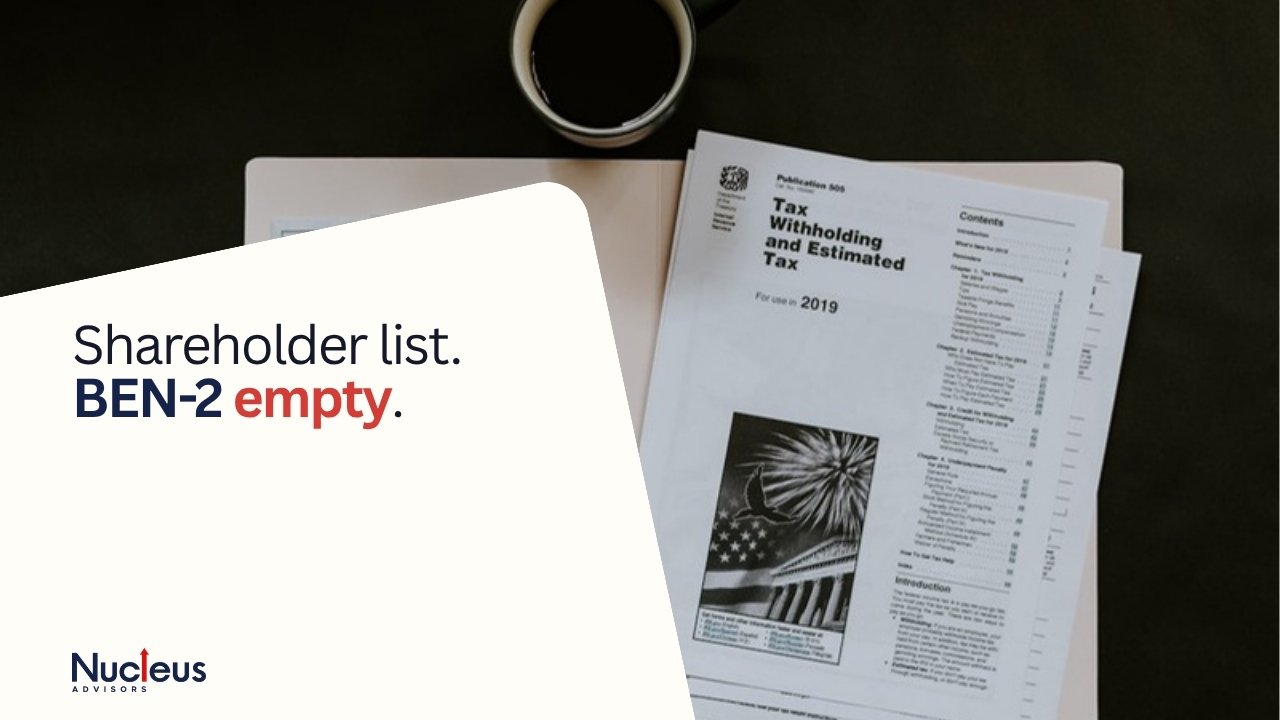
Section 90 SBO reporting: who qualifies as a Significant Beneficial Owner, and how to file
Section 90 sits in the background of most companies' compliance until a diligence team asks for the BEN-2 file and finds it empty. Identifying the Significant Beneficial Owner is rarely about a single shareholder list — it is about tracing every chain, including the ones that run through LLPs, trusts, and foreign holding companies.
9 min read

Fund structuring
Setting up a Category III AIF: the leverage-and-strategy tradeoffs
A Category III AIF gives you leverage and strategy flexibility no other AIF category offers. It also costs more to set up, more to run, and gives up the pass-through tax benefit. Whether the trade is worth it depends on the strategy.
9 min read